
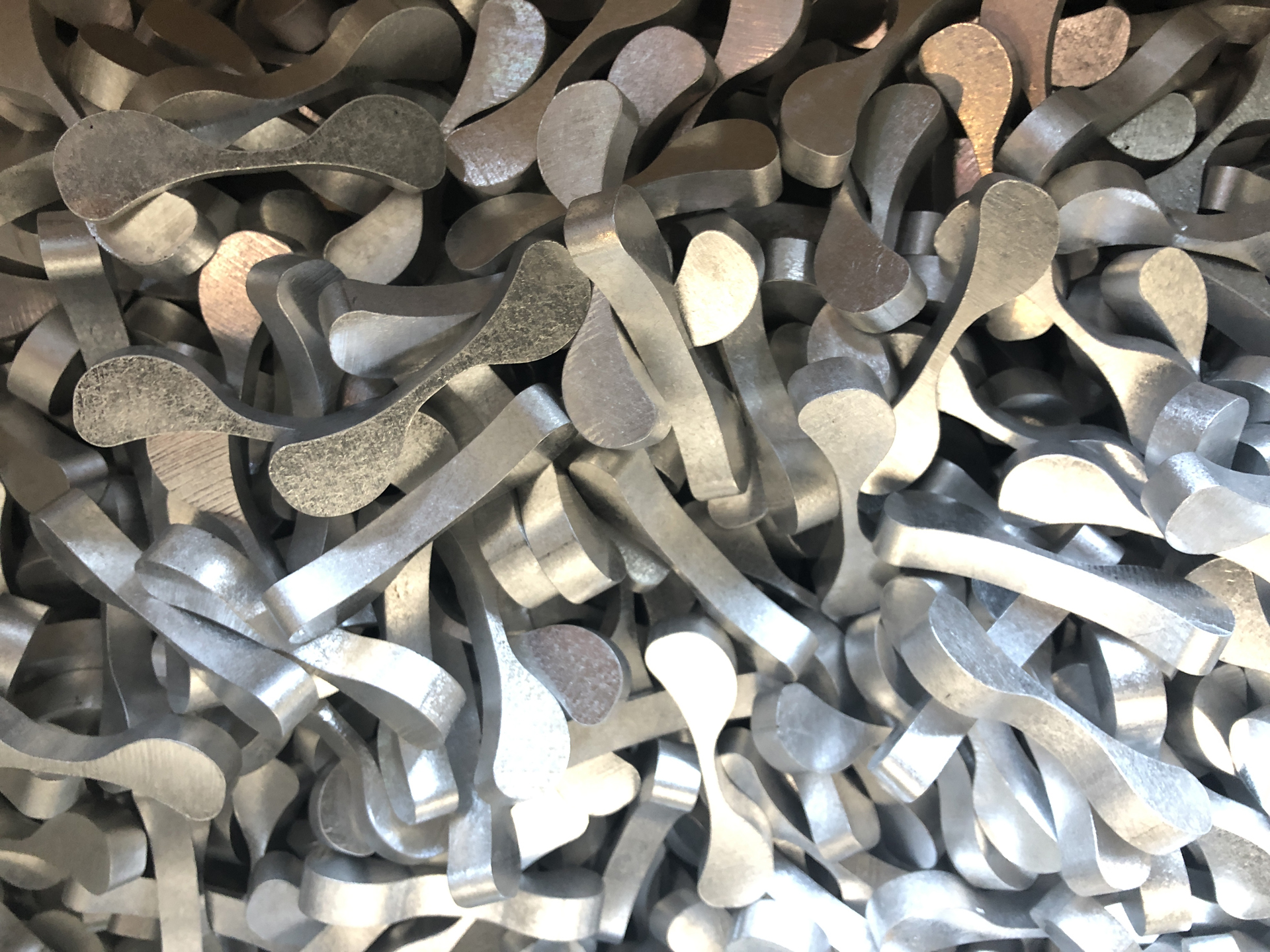
For procurement professionals, selecting the right aluminum alloy is not simply a material decision—it directly affects product strength, machinability, corrosion resistance, cost efficiency, and long-term reliability.
This guide simplifies the core forged aluminum alloy series and temper conditions, helping sourcing and engineering teams make faster and more informed OEM decisions.
1.Core Aluminum Forging Alloy Series (2XXX, 6XXX, 7XXX)
Aluminum forging alloys are categorized by their primary alloying elements. Each series is engineered for different industrial environments and performance requirements.
- 2XXX Series — Aluminum-Copper Alloys (e.g., Alloy 2014 / 2024) The 2XXX series is known for high mechanical strength and strong elevated-temperature performance. These alloys are widely used in applications requiring excellent fatigue resistance and structural reliability.
- Key Characteristics: High strength-to-weight ratio; Excellent fatigue performance; Good heat resistance; Lower corrosion resistance compared to the 6XXX series.
- Typical Applications: Aircraft structural components, racing pistons, high-performance motorcycle engine components, and aerospace forgings.
- 6XXX Series — Aluminum-Magnesium-Silicon Alloys (e.g., Alloy 6061 / 6082) The 6XXX series is one of the most versatile and cost-effective aluminum groups available today. It offers a balanced combination of strength, machinability, corrosion resistance, and surface finish.
- Key Characteristics: Excellent all-around performance; Good anodizing capability; Strong corrosion resistance; Excellent machinability and surface finish.
- Typical Applications: Automotive suspension components, bicycle frames, motorcycle brackets and chassis parts, professional hand tool handles, and general industrial forgings.
- 7XXX Series — Aluminum-Zinc Alloys (e.g., Alloy 7075) The 7XXX series represents the ultra-high-strength category of forged aluminum alloys. These materials are commonly selected when lightweight structures must withstand extreme mechanical loads.
- Key Characteristics: Ultra-high strength; Excellent fatigue resistance; High load-bearing capability; High strength compared with many aluminum alloys, while offering significant weight savings versus steel components in suitable applications.
- Typical Applications: Aerospace structures, performance motorcycle swingarms, high-torque industrial tools, and precision sporting equipment.
Table 1. Aluminum Forging Alloy Series Overview
| Series | Alloy Type | Primary Advantage | Typical Industries |
| 2XXX | Aluminum-Copper | High strength and heat resistance | Aerospace / Racing / Motorcycle Engines |
| 6XXX | Aluminum-Magnesium-Silicon | Versatility and surface finish | Automotive / Bicycle / Motorcycle / Hand Tools |
| 7XXX | Aluminum-Zinc | Ultra-high strength | Aerospace / Performance Vehicles / Heavy-Duty Tools |
2. Understanding Aluminum Temper Designations: T4, T5, and T6
In aluminum forging, the temper designation indicates how the material has been thermally processed after forming. The selected temper directly influences strength, hardness, toughness, dimensional stability, and machinability.
- T4 Temper — Solution Heat-Treated and Naturally Aged T4 temper provides a balanced combination of strength and ductility. Components in this condition typically maintain better toughness and impact resistance compared to higher-strength tempers.
- Key Benefits: Good toughness; Better formability; Improved impact resistance; Suitable for parts exposed to cyclic or sudden loading.
- Typical Applications: Structural components requiring flexibility, impact-resistant industrial parts, and parts requiring additional forming or machining.
- T5 Temper — Cooled from Elevated Temperature Process and Artificially Aged T5 temper is commonly used when dimensional stability and moderate mechanical strength are required after forging or extrusion. In forged components, T5 may be used in selected applications, but T6 is more commonly specified when higher mechanical strength is required.
- Key Benefits: Improved dimensional stability; Better mechanical properties than as-forged condition; Cost-effective processing route; Consistent production performance.
- Typical Applications: General industrial components, automotive parts, and medium-load structural applications.
- T6 Temper — Solution Heat-Treated and Artificially Aged T6 is the most widely specified temper for high-performance forged aluminum parts. It pushes the alloy to higher design strength and structural reliability.
- Key Benefits: Higher tensile strength; Excellent structural performance; Superior load-bearing capability; Ideal for demanding engineering applications.
- Typical Applications: Aerospace components, high-performance motorcycle parts, industrial tools, mechanical systems, and critical load-bearing structures.
Table 2. Comparison of T4, T5, and T6 Tempers
| Temper | Relative Strength | Main Functional Advantage |
| T4 | High | Superior toughness and impact resistance |
| T5 | Medium | Good dimensional stability and balanced performance |
| T6 | Higher | Higher tensile strength and load capacity |
3. Why Raw Material Quality Matters in Aluminum Forging
Even the best alloy design cannot compensate for poor raw material quality. In precision forging, impurity control and aluminum materials consistency significantly affect surface quality, machinability, fatigue life, and structural integrity.
Premium Global Aluminum Sourcing
High-quality forged components begin with high-purity aluminum. At ActionFast, our raw materials are sourced directly from top-tier global origins, including Australia, the United States, and Dubai (UAE). Utilizing aluminum materials from these premium internationally recognized suppliers ensures:
- Lower impurity levels (reduced risk of internal inclusions)
- More stable metallurgical performance
- Improved forging consistency and minimized defect risks
- Superior surface quality after high-precision machining and anodizing
Engineering-Driven Material Recommendations
At ActionFast, material selection is driven by engineering analysis rather than generic material substitution. Our technical team evaluates:
- Load conditions & Weight requirements
- Corrosion exposure & Machining considerations
- Surface finishing requirements & Cost-performance targets
This tailored approach helps customers select the optimal alloy grade and temper combination based on their specific drawings, ensuring both performance and manufacturing efficiency.
4. Procurement FAQ: Aluminum Alloy Selection and Material Quality
- Q1: What factors should OEM buyers consider when selecting aluminum alloy and temper for forged components?
- A: OEM buyers should consider product strength requirements, load conditions, corrosion resistance, machinability, surface finishing needs, production volume, and the overall balance between cost and performance. Standard OEM forging parts typically utilize 6061-T6 or 6082-T6 due to their excellent combination of strength, machinability, corrosion resistance, and surface finish stability. If a product requires higher peak performance, 2XXX or 7XXX series aluminum alloys can be evaluated based on specific engineering drawings and actual application needs.
- Q2: How should buyers choose between 2XXX and 7XXX aluminum alloys?
- A: The decision depends primarily on the operating temperature and nature of the load. Choose the 2XXX series (e.g., 2014) if the component operates in heat-intensive environments (100°C to 200°C+), such as engine pistons or powertrain components, as it retains excellent metallurgical stability under high heat. Choose the 7XXX series (e.g., 7075) if the part operates at ambient temperatures but demands extreme structural strength and load-bearing capacity, such as high-performance motorcycle swingarms.
- Q3: Why does material traceability matter in aluminum forging?
- A: Utilizing aluminum materials from unverified secondary sources or lower-tier countries carries severe hidden risks, as these materials often contain higher impurity levels and internal micro-inclusions. In forged components, this can lead to unexpected structural cracking under high stress, drastically reduced fatigue life, warping during precision CNC machining, and surface defects (like black spots or uneven coloration) during final anodizing. Sourcing from premium origins with complete material traceability guarantees structural safety, consistent yield rates, and long-term reliability.
Conclusion: Selecting the Right Aluminum Solution for Your OEM Project
Choosing the correct aluminum forging alloy and temper is essential for achieving the desired balance of strength, durability, weight reduction, manufacturability, and cost.
Whether your project involves lightweight motorcycle components, aerospace structures, industrial hardware, or professional hand tools, selecting the proper material specification at the beginning of development can significantly improve long-term product performance and production stability.
At ActionFast, we combine engineering expertise, precision forging capability, and premium global raw material sourcing to support customers with reliable and application-specific aluminum forging solutions. By working closely with your engineering and procurement teams, we help transform complex product requirements into durable, high-performance forged components that meet international quality standards.